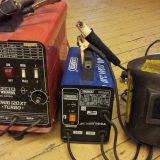
Welding Equipment Adapted to Changes in Manufacturing Industry
The manufacturing industry has constantly changing in the past couple of years and a lot of companies have to modify their jobs and contracts. The necessity comes from a change in the product that the company manufacturers, changes in the regulations in relation to employee safety, and a change in the material used in the process.
The changes in the industry has made companies to rethink the features of their weld cells in order to create more space as well as plan out the equipment to use for the job. An adaptable weld is more than just having more space. It also means having modular welding equipment that allows manufacturers to maximize the value of the equipment.
In order to make a weld cell adaptable, there are several manufacturing changes to be implemented. It includes considering the area used by the weld cell, the arrangement of the equipment, and the overall capabilities of the equipment.
There are benefits of using both semi-automated and automated welding processes in order to optimize the weld cell. The difference is that they have diverse priorities. In semi-automatic welding, safety and ergonomics are the top concerns. In an automated weld cell, maximizing the efficiency of the machine is the most important factor to consider. Quality is important in both processes but the data can be used to improve throughput in an automated weld cell. In a semi-automatic cell, the data is used to determine training opportunities for welding operators.
Benefits of Adaptable Weld Cell
There are several benefits that a company can have when they choose to implement an adaptable weld cell. It allows them to improve productivity and throughput, decrease costs, keep workers healthy, and generate improvement in the long term.
Some companies make the mistake of purchasing equipment that is just enough to fulfill the welding needs at present. It is good practice to buy products that provide flexibility to make the weld cell more adaptable.